The answer is 2! At Neo Floor, there are 2 SPC flooring options that are frequently ordered: single-layer and multi-layer (co-extrusion).
Single-layer floor consists of 5 layers with different functions:
✨ UV Coating layer: prevents color fading from scratch and UV light
✨ Wear layer: protects the surface from wear and tear, creates surface texture of wood or stone
✨ Decor Film layer: provides realistic look and color of wood, carpet, or stone with 4K graphic
✨ SPC Core layer: helps the floor become waterproof, anti-fire spread and durable thanks to limestone powder and PVC composite
✨Padding cushion layer: makes the floor sound-absorbing and comfortable to walk on
✅ With single-layer floor, the maximum thickness of the core layer is only 7,3 mm, and that of the wear layer is only 0,7 mm
Co-extrusion floor is constructed based on ABA structure with 7 different layers:
✨ Urethane UV Coating layer: prevents color fading from scratch and UV light (optional: with aluminum oxide or ceramic beads)
✨ Wear layer: protects the surface from wear and tear, creates surface texture of wood or stone
✨ Decor Film layer: provides realistic look and color of wood, carpet, or stone with HD graphic
✨ Reinforced Rigid Vinyl layer: provides extra support and stability for the core layer
✨ SPC Core layer: helps the floor become waterproof, anti-fire spread and durable thanks to limestone powder and PVC composite
✨ Reinforced Rigid Vinyl layer: provides extra support and stability for the core layer
✨ Padding cushion layer: makes the floor sound-absorbing and comfortable to walk on
✅ With co-extrusion floor, the maximum thickness of the core layer is also 7,3 mm, and that of the wear layer is 0,5 mm (equals to 5 sheets of paper!
In Neo Floor’s production line, we use 100% virgin raw materials, 70% of which are purchased from our home country – Viet Nam. Neo Floor’s SPC flooring products can be tailored to your liking of thickness, colors and styles.
Unilin Technologies is the intellectual property unit of Unilin Group that manages more than 3800 patents over 5000 patent families. Offering services to the whole flooring business globally, Unilin Technologies covers every type of board material, including laminate, solid wood, engineered wood, LVT, WPC, SPC, and more.
Honored to be a partner with Unilin, Neo Floor is now applying the 4 most popular technologies in our Rigid Core SPC flooring.
💥 Uniclic: Uniclic helps floor installation easier and faster with the BEST PERFORMANCE among all locking systems. This technology can create no difference in height, last for a long period of time and fit all materials from 3,2 mm. Moreover, the customer can personalize the Uniclic profile to their own preferences.
💥 Unipush: Unipush is a one-piece, fold-down technology that is easy to use and produce. Just by pushing the short side of the panel down into the adjacent plank, you get a solidly locked joint. Manufacturers need no additional materials, such as inserts, and no extra equipment to produce the Unipush profile.
💥 Unidrop: Unidrop provides quick and easy fold-down installation with the BEST PERFORMANCE of all locking systems. To manufacture this type of lock, producers need no glue or plastic inserts, and just need simple added adjustment within the current production line.
💥 Pressed Bevel: The Pressed Bevel Technology enhances the appearance of resilient flooring, and creates a more realistic look than other technologies. Rigid floors that are suited with a pressed bevel will also be more “cushy” for your feet, since you won’t feel the sharp edges at the top of the bevel.
These above-mentioned locking technologies are all among the best technologies, providing the best features and the best profits.
Want to experience these technologies? Try Neo Floor’s flooring products!
Unilin Technologies, a leading provider of patents and technologies to the flooring industry, is pleased to announce that NEO Floor has signed a license agreement for ClickControl, the intelligent quality control device for locking systems.
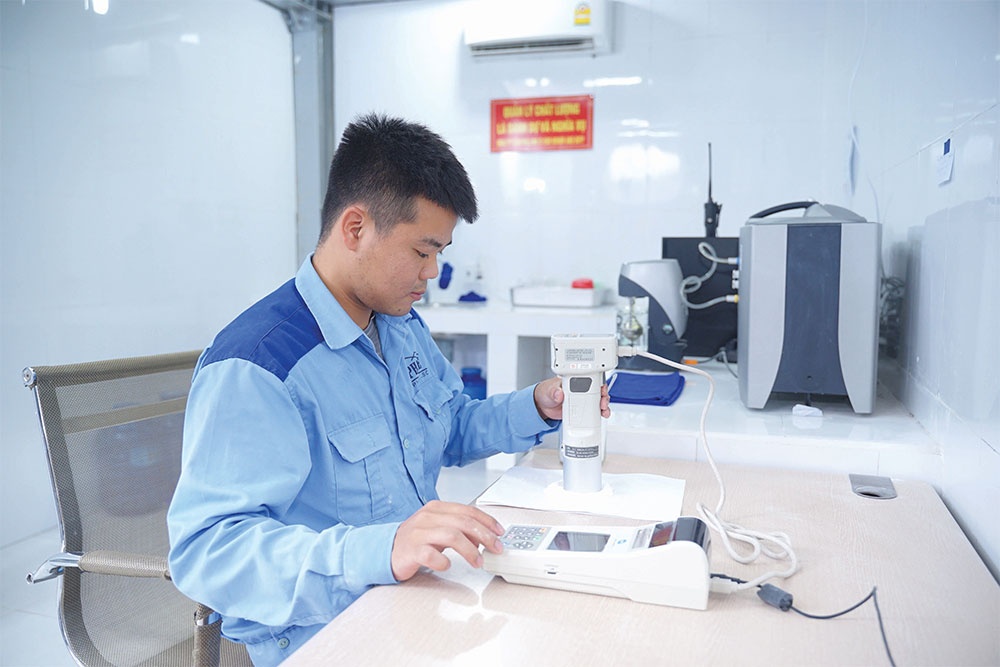
ClickControl is an innovative quality measurement device designed to enhance the accuracy, speed, and safety of quality assurance processes in the flooring industry. By eliminating the need to cut up panels and reducing reliance on experienced milling operators, ClickControl offers a fast and non-destructive way to check the quality of click profiles.
“ClickControl allows us to optimize our production with higher accuracy for the click profile, while also reducing waste,” said Vince Mai, Vice President R&D of NEO Floor. “It will enable us to improve the quality of the click and the receive immediate feedback on the quality.”
ClickControl not only improves efficiency and accuracy but also enhances the availability of production data, with the possibility to share this information with customers. Its user-friendly design allows even unskilled operators to effectively utilize the device, reducing the need for highly experienced milling operators and thereby improving overall operational efficiency.
“ClickControl is the best aid for operators in milling click and it is safer to use than conventional methods that require sawing of the panels for profile control,” states Grin Yin Jan, Sales Director at Unilin Technologies. “We believe that ClickControl will give NEO Floor a competitive edge in the flooring market and help them achieve higher customer satisfaction and loyalty.”
This partnership marks a significant milestone in the adoption of advanced quality control technology within the flooring industry. With ClickControl, NEO Floor can enhance the quality of their click systems, streamline their production processes, and ensure the highest standards of safety and efficiency.
By investing in the production of new material lines, core rigid vinyl flooring manufacturers can achieve their profit objectives. However, only a limited number of companies can effectively narrow the gap by augmenting their investment in research.
The most recent iteration of flooring materials is core rigid vinyl. This innovative technology has five layers UV coating, wear layer, decor film layer, core layer, and pack padding and has caused a flooring industry revolution.
The product is at the forefront of consumer trends in the US, Europe, South Korea, and Japan, and its superior qualities in comparison to previous generations of conventional flooring include water resistance, fire resistance, effective isolation, a variety of designs, and safety for consumers.
Neo Floor, which is a member of Pha Le Group, benefits from a plentiful supply of CaCO3 stone material (which comprises 75 per cent of the volume of the product’s core layer) and the formula for combining CaCO3 with additives, which enables the company to master the application technology for constructing core rigid vinyl floors.
In 2019, a group of professors and physicians from the Polymer Materials Research Centre, affiliated with Hanoi University of Science and Technology, initiated the development of this formulation in conjunction with Neo Floor.
Emphasising the importance of fostering research and development (R&D) to establish competitive advantages, Neo Floor is dedicating up to 3 per cent of its annual revenue towards such efforts. The R&D division serves three primary purposes: conducting market and survey research; enhancing products, technologies, and materials; and investigating and developing new products.
Neo Floor is establishing three golden objectives for 2024. First is to conduct an initial market survey, investigation, and development of new potential markets, including but not limited to Canada, Mexico, Indonesia, and South Korea. Second is to develop novel sources of competitively priced basic materials that are of high quality. And third is to introduce new technology products featuring a lightweight, resilient central layer, and advanced production technology.
Currently, R&D for core rigid vinyl products focuses on enhancing the durability of thin products, preventing surface blemishes, and reducing floor weight. As a result, prevalent core rigid vinyl R&D activities frequently focus on the formulations, stability, and increased durability of the core layer; enhancing the product’s scratch resistance, which is inferior to ceramic tiles or laminate flooring; and simultaneously refining the surface to resemble genuine wood more closely. The reduction of core weight is crucial to enhancing product value through the mitigation of shipping volume and logistics expenses.
Eco-friendly products are a primary consideration for development
Neo Floor’s challenge is to optimize costs, speed, and security to remain competitive with large manufacturers such as China. The company should also be receptive to information and insights from partners and competitors, as Chinese manufacturers continue to have a significant impact on the flooring industry.
At present, the number of global manufacturers capable of producing core rigid vinyl products featuring a lightweight core layer is limited. Neo Floor plans to introduce this product at the International Surfaces Event in February 2024, the largest flooring materials trade show in the US, held annually in Las Vegas.
R&D is crucial in bolstering the competitive edge of organizations, facilitating elevated technological benchmarks, fostering increased productivity, expanding market presence, and diversifying production. On the other hand, R&D can be risky investment that is more challenging to effectively control than regular production and business operations, since companies cannot predict costs. Maintaining a competitive position, however, is challenging for organizations that do not invest.
Consequently, R&D as well as enhancing and devising production processes and technology are critical endeavors that yield numerous advantages. These include establishing a competitive edge over rivals, expanding market presence, and maximizing monopoly profits. In light of the ongoing Fourth Industrial Revolution, it is critical for every business to encourage R&D.
Research and development for core rigid vinyl products often focuses on boosting durability
At the Vietnam Academy of Science and Technology, Neo Floor assembled pre-eminent experts in materials technology to form a specialized R&D block. A suitable proportion of annual business activities’ funds are allocated to R&D, ensuring continuity from the outset of product development.
Human health and environmentally favorable products are the primary considerations in the development of the company’s merchandise. The trend towards replacing traditional flooring materials like wood and natural stone with rigid core plastic flooring products is what drives this development.
These products feature various properties similar to those of natural materials, but they have superior properties, including resistance to termite shrinkage and fire spread, water absorption, and ease of installation. The composition is devoid of heavy metals, carcinogens, and formaldehyde in particular; therefore, it is extremely environmentally and user-friendly. Due to its confined operation, the production process minimizes environmental emissions.
While digital transformation may present challenges for some organizations, it enables Neo Floor to actively engage in the global market via e-commerce platforms. VIR’s Angela Nguyen talked to COO Le Quang about its digitalization strategy.
Digital transformation strategies are generating considerable buzz. Which elements are most critical to the achievement of Neo Floor’s transformation?
COO Le Quang
The three main factors that directly impact success or failure in digital transformation are people, institutions, and technology. Delivering excellence in these three areas of the organization provides an excellent foundation for the success of any such transformation.
First off, people are the most important factor determining the success of digital transformation. Each position in the enterprise, from the board of directors to each employee, needs to realize their role and responsibility in this transformation. Everyone needs to proactively access new technology and improve their qualifications and professional expertise to meet the new work and operating methods of the enterprise.
Furthermore, corporate culture is an important factor that connects each individual’s efforts. Each business member needs to connect with each other and with change. An open culture enables employees to participate, lead, and propose changes or improvements to the company’s transformation activities.
Neo Floor has carried out this task well. A youthful, dynamic, and creative corporate culture has been built since the early days of establishment. Therefore, each member has proactive awareness and adapts to creative innovations in the company’s production and business operations. In particular, digital transformation brings significant advantages to business operations as well as convenient connections in the daily work of workers.
In terms of institutions, most of the regulations and institutions existed before the digital environment. As the digital environment changes, there must be institutional change. This transformation is about changing thinking, redesigning business processes, and internal regulations; these designs always put people at the center.
Finally, technology is an important tool for businesses to carry out digital transformation. Neo Floor has the advantage of having an advanced technological foundation. All production machinery and equipment boast modern tech that integrates with new management applications. We have also deployed an enterprise resource planning system, connecting all production, operation, and business activities to ensure synchronization and effective and quick management.
In what ways have the deteriorating market environment, elevated interest rates, and inflation affected the change management strategies of organizations?
The current market economic situation is still difficult. Commodity trade is declining, and prices are escalating, causing the business activities of enterprises in general to decline. In this context, businesses need to quickly adapt to the market, introduce policies to promote sales, improve business competitiveness, and effectively manage costs.
In the rigid core vinyl flooring manufacturing sector, when the UFLPA Act was promulgated with a policy of not using materials from the Xinjiang-Uyghur region, it led to a wave of large buyers fleeing China. The challenge for rigid core vinyl flooring manufacturers is to quickly adapt to the market, complete the supply chain, and ensure transparency of the origin of raw materials.
Supply chain management is an urgent requirement for rigid core vinyl flooring manufacturing enterprises when selling into the US market. The digitalization of operational processes and services for customers is what can help solve the very real problem of the supply chain while still keeping costs low.
Neo Floor is prepared to adapt to markets in order to make progress.
Neo Floor’s use of modern tech offers up sublime products
What are the most significant change management challenges associated with the digital transformation of Neo Floor?
On the people side, the main challenge is the realization that digital transformation requires leadership in change management. It’s not a question of investing in some software, and it’s done. It means incremental and permanent changes to the way people work.
The biggest technical challenges tend to be some combination of adopting new technologies, using data science as a driver for business improvement, and problems with legacy systems. Legacy systems that do not communicate and share information and often contain corrupted data can create real roadblocks. Problems with legacy systems can slow operations down rather than speed them up.
Neo Floor has built a detailed roadmap for each activity and operation, and the digital transformation project board will closely follow the implementation progress of each department and encourage all employees to participate. It is necessary to motivate implementation and ensure the set roadmap.
Those in charge of this function will inspire other members to carry out tasks and understand the regulations and operating procedures of the enterprise. This is a decisive factor for success.
How can an internal communications strategy at Neo Floor promote and ease the process of end-user adoption?
Good communication has been a key success factor in traditional change efforts, and it is just as important in a digital transformation. In a digital context, companies must get more creative in the channels they are using to enable the new, quicker ways of working and the speedier mindset and behavior changes that this requires.
Internal communication is a necessary element for this activity, especially since digital transformation is an activity that covers the entire enterprise. Internal communication activities start from the project launch phase and convey awareness to members throughout the process to promote the spirit of cooperation and improve the productivity of all employees.
Could you provide a concise explanation of the significance of change management in digital transformation as a means to approach global value chains?
Good governance is the foundation for a breakthrough. Neo Floor has passed the quiet period of the market, but it is also an opportunity for businesses to look deeply into corporate governance activities and plan for the next stage. The world is expecting an economic recovery in 2024, and enterprises need to quickly seize new opportunities from the market to develop and breakthrough.
Understanding this, Neo Floor has made careful preparations in all aspects, including production and business management capacity and quick adaptation to the market.
In an effort to integrate rigid core vinyl tiles manufactured in Vietnam into the global value chain, Neo Floor is constructing a vast supply chain that ensures the quality of raw materials.
Managed by Pha Le Group, Neo Floor aspires to achieve substantial annual growth in revenue and profits by the end of 2024. This will be accomplished by allocating more than 90 per cent of output to export markets worldwide, with a particular emphasis on the US and the EU. The company holds the belief that the trade dispute between the US and China is unlikely to reach a resolution.
However, Vietnamese goods do not incur anti-dumping duties ranging from 8 per cent to 30 per cent on the European market, in contrast to other Asian nations, most notably China. The utilisation of imported input materials in the production of exported products will substantially mitigate the exchange rate risk for the company.
Additionally, the factory of Neo Floor in Haiphong city in the north receives preferential import tax treatment and zero VAT on raw materials imported for export purposes, which further alleviates the company’s financial burden.
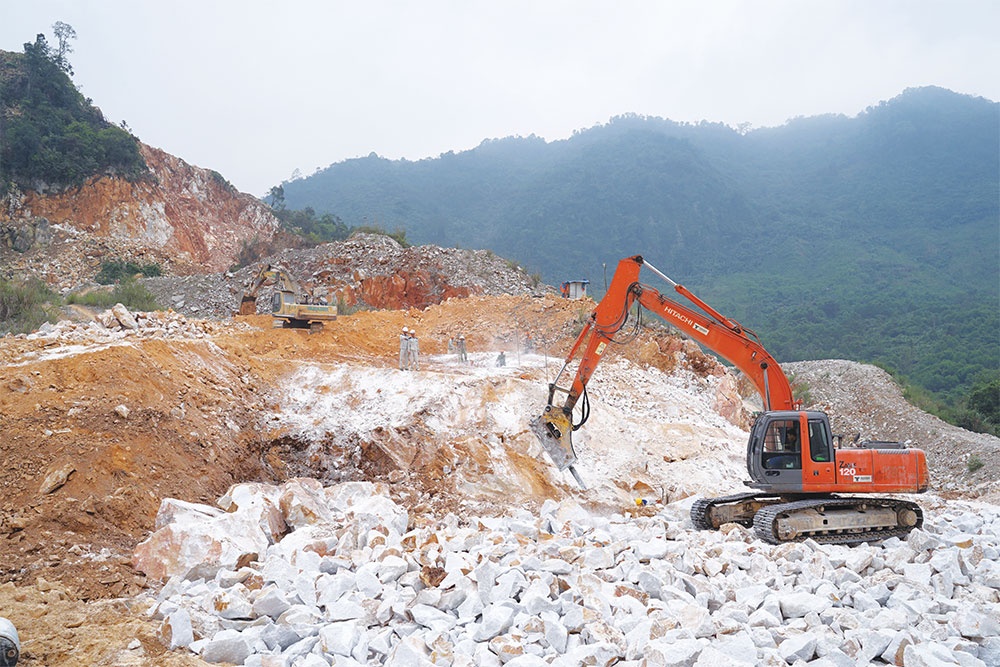
Neo Floor’s six mineral mines also under Pha Le Group – two granite mines in Ninh Thuan province, three white marble mines in Nghe An, and one stone quarry in Quang Binh – further contribute to its substantial production volume of about 26 million square metres of rigid core vinyl flooring annually. The CaCO3 mine in Nghe An is widely regarded as a prime source of white and brilliant marble in the world. Spanning an expansive area of more than 10 hectares, its reserves are exceptionally abundant.
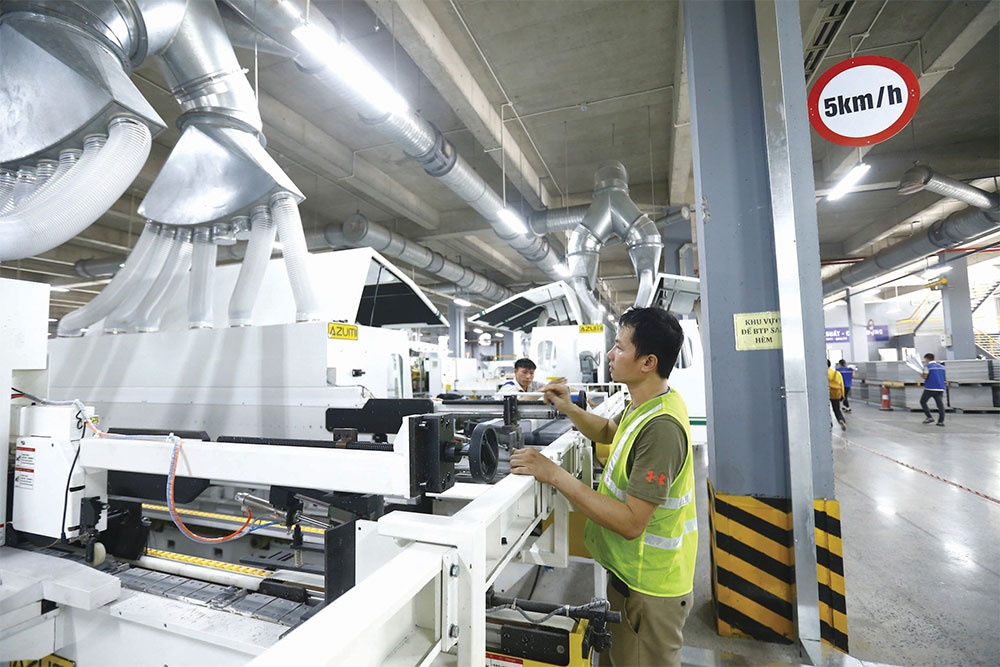
CaCO3 stone powder, PVC plastic, and additives are introduced into the extruder under a specific combining formula to make plastic sheets. The wood grain layer is pressed and coated with UV paint using an additional machine system, after which it is cut to the specified dimensions. Five layers are produced in total: after passing the plastic tile panels through a securing press machine, they are transferred to a rubber base layer.
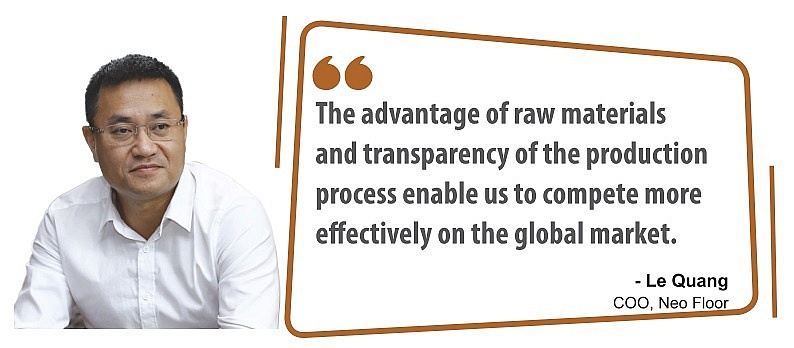
“The advantage of raw materials and transparency of the production process enable us to compete more effectively on the global market,” said Neo Floor COO Le Quang.
Neo Floor is investing in advanced exploitation methods and mastering processing technology with the raw materials at hand. Therefrom it can effectively manage product quality to satisfy the needs of domestic and international markets with an annual CaCO3 stone output of 300,000-500,000 tonnes.
Nevertheless, intense competitive pressure compels Vietnamese rigid core vinyl flooring manufacturers to promptly adjust to market conditions, finalise the supply chain, and guarantee origin transparency.
Neo Floor incorporates past experiences into its action plans, recalling a period when the company engaged in the exportation of raw materials extracted directly from quarries. Neo Floor made an investment in a production line for CaCO3 (Filler Masterbatch) additives in 2014. These additives serve as fillers in the manufacturing process of domestic and industrial plastic products.
The primary objectives of the line are to increase product durability, thermal resistance, and cost savings. The company experienced a substantial surge in revenue following the completion and implementation of the Filler Masterbatch production line in the second quarter of 2016. The selling price of this product is 6-7 times that of stone powder products and 13-15 times that of standard CaCO3 stone. The percentage of the firm’s total revenue attributable to Filler Masterbatch sales is rising, from 80 per cent in 2016 to 85 per cent in 2017, and then to about 90 per cent in 2018.
Nevertheless, due to its reliance on imported critical raw materials and its lack of source independence, Neo Floor’s profits are significantly impacted by global plastic resin price fluctuations and exchange rate risks. The Filler Masterbatch is composed primarily of primary plastic granules and CaCO3 stone powder, which together account for approximately 70-85 per cent of the volume.
However, the cost of this raw material is dozens of times bigger than that of the stone powder, resulting in the virgin plastic resin price comprising 55-60 per cent of the cost structure. This factor is beyond the control of the firm and negatively impacted net profit in H2 of 2018.
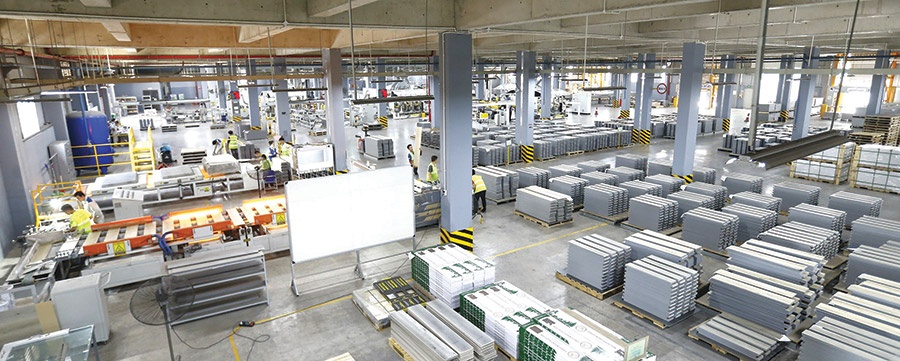
Neo Floor, whose capacity is approximately 26 million sq.m of floor per year and accounts for nearly half of domestic rigid core vinyl flooring production, seeks to add surplus value to the product by developing consumer goods through the application of technology. Costs and time are reduced through the utilisation of the company’s available conditions for transporting products from the factory to the seaport.
Additionally, the organisation maintains competitive pricing, on-time deliveries, and high-quality products through utilisation of an efficient logistics model and exceptionally qualified staff. Since 2018, 3 per cent of Neo Floor’s annual revenue has been allocated to research and development, in collaboration with eminent doctoral candidates from Hanoi University of Science and Technology, to investigate the applications of CaCO3 in depth.
Neo Floor, which has developed a business strategy suited to the new circumstances, has approached and negotiated with major local and foreign distributors to close orders in recent times.
A member of the Pha Le Group ecosystem, Neo Floor completed its plan to expand production scale to 14 million square metres in Vietnam in October. The company is preparing for a multi-million dollar investment plan to expand its rigid core vinyl floor production system to 26 million sq.m of floor space annually to meet the growing needs of its customers.
Le Quang, COO of Neo Floor
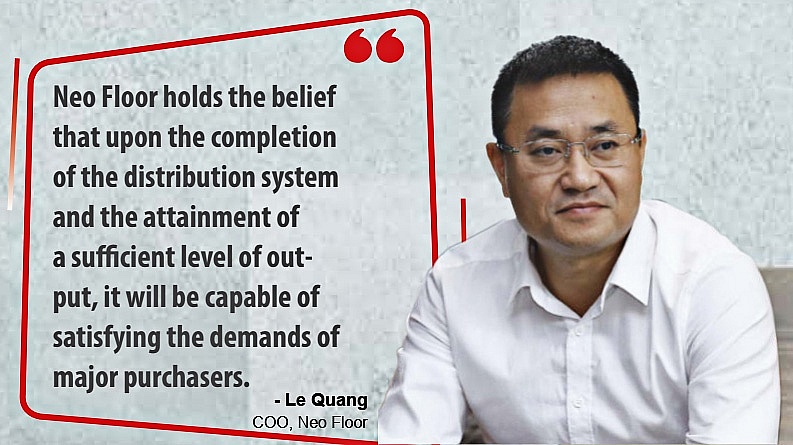
Le Quang, COO of Neo Floor, said that the company holds the belief that upon the completion of the distribution system and the attainment of a sufficient level of output, it will be capable of satisfying the demands of major purchasers, including Tucsun, CA Flooring, Discount Hardwood Floors, Old Master, and Town and Country Ceramic Tiles.
Neo Floor disclosed its intention at its shareholders’ meeting conducted this summer to allocate domestic consumption to a mere 10 per cent, with the remainder of its product portfolio being designated for export. Additionally, the corporation has acquired from a European partner the copyright for key locking technology.
The competitive advantage of Neo Floor is founded upon two factors. Firstly, CaCO3 stone powder comprises three-quarters of the basic materials used in the production of rigid core vinyl floors.
The company presently possesses a CaCO3 quarry situated in the central province of Nghe An, which boasts reserves exceeding five million cu.m. As a result, the project benefits from a raw material area that guarantees American origin and quality.
Secondly, the firm’s substantial research and development expenditures of hundreds of thousands of US dollars have yielded specific outcomes. Neo Floor’s scientists have developed a formula for combining additives after two years of research, thereby refining and dominating the entire rigid core vinyl floor production line.
Neo Floor research indicates that the demand for such flooring in the US market reaches approximately 15,000 containers per month, with China supplying more than 10,000 containers, Vietnam 4,000, and India, Thailand, and Cambodia comprising the remaining suppliers.
The value of Vietnam’s rigid core vinyl flooring exports in the US market has increased on an annual basis. The total export value of such flooring from Vietnam to the US reached $939 million in 2022, representing 17 per cent of consumption value. Export output reached 125 million sq.m, which represents 28.7 per cent of US consumption, according to the General Department of Vietnam Customs.
“Neo Floor has implemented a state-of-the-art management system and forged a collaborative alliance with major distributors of construction materials in the US,” Quang said. “Commencing in 2021, the largest supermarket chain in the US, Home Depot, has carried the organisation’s rigid core vinyl flooring products. Significant orders are also being finalised with additional significant distributors such as T&A Supply, Menards, Ollie’s, and numerous others.”
Flooring has expanded from plain concrete to now include an array of styles in either solid wood, tile, carpeting, marble, and even imitation materials such as vinyl or laminate flooring. Each type is in constant development to maintain durability and ease of installation, which must adapt and grow with the consumer’s ever-changing needs.
With the recent advancement of industry research and technology, flooring materials have reasonably incorporated a tough compound or composite structure – essentially, a calculated mix of materials, to maximise their function and durability, whilst maintaining a sleek appearance.
It’s no wonder why we’re always spoilt for choice when entering showrooms and find it hard to choose just one floor covering.
Cấu tạo 5 lớp của sàn SPC, mỗi lớp có tác dụng chuyên biệt khác nhau, mang lại sự bảo vệ tối đa
Stone plastic composite (SPC) flooring is one of the more hardy types of flooring products available today. This type of flooring has long been in production, but quickly gained popularity after cushioned and plank varieties were launched in the 1960s. SPC flooring became an integral part of home design ever since.
What is SPC flooring?
The SPC (stone plastic composite or stone polymer composite) flooring material is a high-quality type of vinyl, commonly referred to as luxury vinyl with an exceptionally rigid and durable core composed partly of polymer. It is particularly useful in high-traffic environments such as those in commercial applications.
Vinyl flooring options are customizable and come in tile, sheet, and plank forms – all these forms of stone plastic composites are made to cover entire flooring areas and feature a click-and-lock system along its edges; they can be assembled and disassembled with relative ease.
Just like its other product forms, SPC in plank form is a resilient flooring option that can last a long time due to the combination of limestone or stone powder and assorted stabilisers in its core. The layers above and below the core assures dimensional stability in each plank.
The layers in each individual piece are as follows, labelled from top to bottom:
UV layer (topcoat)
Prolonged exposure to UV (ultraviolet light) rays can cause significant damage to most surfaces, including tough hardwood floors. Selected SPC flooring features a protective UV topcoat layer, which helps prevent unsightly discolouration from the sun.
Wear layer
Unlike premium brands, all forms of SPC flooring will have a heavy-duty, protective wear layer of varying thickness, which is resistant to scratches and stains. One example of this is an aluminium oxide wear layer. The lasting strength and durability of flooring planks are attributed to this transparent layer.
A urethane-based wear layer, for example, is easy to clean, enabling this type of flooring to look freshly installed even after lots of foot traffic and multiple wipes.
Vinyl image layer
Mimics the appearance of natural wood or stone via a decorative print – embossed stone plastic composite planks tend to have a natural yet realistic look to their vinyl images that belies the true nature of the material.
Composite core layer
The most unique component of stone plastic composites is its dense and rigid core, made from a mix of pulverised limestone and stabilisers such as bamboo dust and PVC (polyvinyl chloride) materials.
Stone plastic composite planks are an excellent choice for areas with heavy foot traffic due to this sturdy core layer which is able to withstand a variety of impacts that would dent regular vinyl or plank floors.
Backing layer (optional)
Resting behind the functional layers is a foam or cork backing layer that provides the stone plastic composite planks with added comfort and insulation.
Installing SPC flooring
SPC products are easily installed on your existing floor thanks to their nifty click-and-lock edges. The plank version, for example, is usually available in 2mm to 8mm+ thickness. Choosing thick or thin planks will depend on the type and condition of the existing floor or subfloor you already have.
Although you can forgo installation costs by hired contractors, you will still need ample planning and some elbow grease when affixing the planks yourself at home.
Flooring layout planning
Like regular vinyl plank flooring, stone plastic composite planks are best arranged by working from the most prominent wall of a room outward, towards the door- or entryway. In your DIY installation, plan to lay the first row of planks parallel to this wall.
As you continue across the room, stagger rows so that end joints do not align at the same point for adjacent rows – end seams offset at least six inches from row to row is recommended.
You can use baseboards or similar to hide uneven plank formation in your last row.
Remove trim moulds
Any wall trim in contact with the floor including baseboards and case mouldings around doors, should be removed for ease of plank installation. Trim mouldings can be pried off the wall with a flat pry bar, and reattached after the new plank floor has been installed.
Door case mouldings are also relatively easy to remove. Plank installation can be done quicker in rooms if you remove the door case mouldings and the doors from their hinges too.
Floor preparation
Before the new planks are affixed, be sure to sand down any uneven subfloors – a flat, even surface is optimum as the underlayment for plank flooring.
However, if you have a subfloor made of concrete or wood, be sure to use appropriate compounds to level the subfloor first. You can then choose a thick or thin stone plastic composite plank to lay over the modified subfloor, to ensure stability and prevent hidden irregularities.
Cutting SPC planks
Use a quality utility knife to carefully score through the face of a plank, several times. The pieces may snap off easily when folded backwards from the front of the plank – if not, lightly run the utility knife along the fold to finish the cut.
TIP: Use a fine-tooth handsaw to cut straight through the entire plank, to save some time.
Testing SPC planks
Start with a full plank at the very centre of the prominent wall and continue on either side until you reach the ends of the row. The flooring layout will be aesthetically pleasing if the planks are of equal lengths at the opposite side walls.
Remember to leave a 1/4 inch gap near the wall and at the ends for expansion and final adjustment. For this, you can place spacers against the walls to mark the gap.
The installation method for SPC planks
Each plank features a unique click-and-lock edge on both of its longer sides, so installation can be done in a snap. Just lay the first plank flat against the floor, while the second plank is angled down into the groove along the side of the first plank. The planks are locked into place when the second plank lies parallel to and is flush with the first plank.
Join the planks end-to-end before moving on to the next row. Be sure to stagger end joints in a new row such that they are at least six inches away from the end joints in the previous row.
Cut to fit SPC planks around protrusions
Cutting these planks to fit around immovable floor fixtures is easily done with just a utility knife. The cutout plank can still lock on to the others – first attach the cutout to the adjoining plank while holding it upward, at an angle, and slowly fold down the cutout until it snaps into place with the adjoining plank.
It may sometimes also be necessary to disassemble previous planks in order to get the cutout plank in place.
Installing the final SPC planks
A utility knife is again used to make lengthwise cuts along the plank, leaving room for a 1/4-inch gap with the wall. The planks can then be joined to the others as previously mentioned, by first clicking them together, end-to-end, then folding the tongues into the grooves of the second-last row of planks.
For a snug fit, use a drawbar tool to tug the final row of planks into place against the previous row.
Reattach trim moulds
Bare areas on the wall close to your new floor will make the whole room look unkempt, so reattach the wall trim removed earlier, preferably using a pneumatic brad nailer. Unlike manual nailing, a brad nailer will not damage the trim, but you can still use a nail set and hammer – recess the nail heads below the surface of the trim before manual nailing.
Depending on the thickness of the stone plastic composite planks of your choice, you may need to trim the ends of some mouldings or replace them with new ones to ensure a good fit.
Other considerations of SPC flooring
Stone plastic composites come in a wide range of designs and patterns according to their underlying vinyl image layer, and as such are adaptable to many different styles. The suitability of this type of resilient flooring is determined by its grade, application and functionality, usually for residential or commercial purposes.
Generally, SPC flooring is warranted by its grade. It is important to choose the correct type of flooring that will be able to sustain the related foot traffic after installation, in addition to other wear and tear.
Besides this, two safety functions should be considered when choosing stone plastic composite floors, namely anti-slip and anti-static ability.
The anti-slip rating (R-rating) of stone plastic composites ranges widely, depending on where the flooring is installed. In general, a high value of the R-rating denotes superior slip resistance – only if the floor is free of surface liquid. You should choose product forms with a high R-rating to install in potentially risky areas in your home, such as the kitchen or bathroom.
Flooring protected by anti-static stone plastic composites does not conduct electrostatic charge. It can ideally be used in pharmaceutical commercial offices, laboratories, and hospitals to keep them from accumulating dangerous static electricity.
Advantages of SPC flooring
New SPC products are regularly being introduced in the flooring market in a huge variety, such as planks, sheets, or square tiles. Although these product forms have similar capabilities, each has special features suited to a specific application, such as the ability to withstand heavy foot traffic activity or its moisture-resistant surface.
For example, a traditional LVP (luxury vinyl plank) flooring has a flexible and soft core due to its polymer composition and often must be fastened down with industrial-strength glue. These planks might not provide as much support underfoot: heavy furniture can easily dent the soft and bendable material, despite it being water-resistant and highly tolerant to greasy stains.
Nevertheless, traditional luxury vinyl planks are a good aesthetic option as they look realistic and are available in a variety of colours and sizes.
Comparatively, for innovative hybrid forms of luxury vinyl planks, such as stone plastic composite flooring, the planks each have a sturdy and rigid core, and therefore, are more resilient to surface damage and/or heavy usage.
Stone plastic composite planks are made with a click-and-lock feature that makes installation a breeze for seasoned contractors and DIYers alike; their elegant, long-lasting, and sturdy finish bumps up the resale value of any property as well.
SPC floorings each have a decent style and are durable, water-resistant, stain-resistant, and pet-friendly to boot! They are available in just as many colours and sizes as regular vinyl planks – if you can’t find them in showrooms, you can just as easily get them for a fair price online.
Summary – The ideal flooring solution?
Regardless of the product form you decide to cover your floor with, SPC floorings are one of the best types of rigid core flooring that will allow for a quick, easy, and long-lasting upgrade to your home:
Versatile
The style possibilities you can opt to work SPC into are endless, due to the sheer variety of designs they come in.
Functional
SPC floorings are able to withstand the demanding requirements of high-use floors. Plus, they repel moisture and are highly resistant to physical and chemical abrasion, impact, humidity, and stains.
Quick fix
Each stone plastic composite product is manufactured with a click-lock system installation which easily and seamlessly fits together with other pieces of the same product family, much like interlocking pieces of a puzzle.
Easy clean
SPC floorings are manufactured with clear top layers which are highly resistant both to scratches and stains – they can be kept clean with just a simple wipe-down, without the need for harsh detergents or scrubbing.
With this, you can see why the stone plastic composite is the preferred choice of flooring in many homes – the composition will likely be improved for even better functionality as time goes by.
Quality is one of the big concerns when buying and installing floating floorboards for renovations and new construction projects.
Even though the manufacturer supplies a lot of information regarding the product specifications and its uses, sometimes there are technical details that we don’t know how to interpret.
At Neo Floor, we offer you some advice on how to choose the best laminate flooring for your property, and we will explain to you what is the AC classification and the difference between AC4 and AC5 laminate flooring.
The AC classification is a general standard that classifies laminate and floating floors according to their resistance to abrasion, friction, or wear.
Manufacturers perform a test known as “Taber’s Test” to determine the abrasion classification, which consists of passing a roller with a sandpaper that goes around and exerts pressure on the surface of the floor.
Depending on the number of rotations the sandpaper can make before the first layer of the laminate floor wears out, the following classification can be determined:
AC1: holds more than 900 turns.
AC2: holds more than 1800 turns.
AC3: holds more than 2500 turns.
AC4: holds more than 4000 turns.
AC5: holds more than 6500 turns.
AC6: holds more than 8500 turns.
On the laminate flooring specifications, the acronym AC is always accompanied by a number from 1 to 6.
The higher the number, the more resistant the floor will be.
AC4 or AC5 flooring, which one is better?
All laminate floors are stylish, easy to install and cost-effective compared to natural materials such as wood, but when choosing one or the other, we will have to consider some aspects that go beyond their design or their easy installation.
Typically, the floorings sold for residential purposes are classified as AC3, AC4, AC5 and AC6.
Even though, AC3 floors are not very resistant and are meant for houses with low traffic, so their demand tends to be smaller.
Considering a typical residential property, it is usual to choose AC4 or AC5 floating or laminate flooring because they offer the best price-performance-durability relation.
In general, the resistance of the AC5 laminate floor is higher, but this doesn’t mean that it is the most appropriate for you.
In fact, depending on the use you are going to give to the area, it may be enough to install an AC4 floorboard, which is also often more affordable.
On the other hand, the difference in terms of wear and tear between AC5 and AC4 flooring is minimal, especially if it is to be installed on a regular residential property.
In the case of businesses or spaces with high traffic, the AC5 floor offers additional advantages over the AC4 floor, especially because it remains in better condition, extending its lifespan considerably.
As you can see, there is no right answer to the question: what is better, AC4 or AC5 parquet? Instead, there are different alternatives depending on the needs of your house or commercial premises.
3 Tips for choosing an AC4 or AC5 laminate flooring
Color
AC4 or AC5 laminate flooring adapts to any decorative style.
Some even resemble patterned, stained or stripped wood, offering original finishes.
Before choosing the color of laminate flooring for your property, remember:
Light tones give luminosity and increase the feeling of spaciousness in the rooms.
Beige tones give greater emphasis to the wood.
Gray tones are original and attractive.
Dark tones offer a sense of coziness and elegance, and their defined grains are ideal for ethnic or minimalist decorations.
Shades that imitate natural woods (oak, beech, pine) are perfect for rustic style homes.
Usage
Depending on the intended use, it is recommended that you look for a laminate floor having a larger or smaller thickness.
For example, in rooms with low traffic such as the bedroom, a floor thickness of 7 mm would be enough; while in houses with children or pets or in areas such as the kitchen, it may be interesting to look for a laminate floor with a thickness between 8 and 12 mm.
Normally, all AC4 and AC5 floors fit these criteria.
Treatments and extra features
Other aspects that you can take into account when choosing an AC4 or AC5 floating floor are:
Board thickness: the thicker the intermediate layer of the laminate flooring, the more solid it will be, the click will be more resistant and a better acoustic performance when stepped on.
Antibacterial treatment: some AC4 and AC5 laminate floors have a special treatment to prevent the growth of bacteria on their surface. This type of flooring is recommended for homes with pets, small children or people with allergies.
Antistatic treatment: this treatment reduces static electricity and, therefore, the accumulation of dust and lint on the floor.
Anti-scratch treatment: this “extra” is especially important to protect the floor from when someone is moving furniture or when pushing trolleys or wheelchairs.
Anti-slip treatment: essential if you want to install laminate flooring in wet areas of the house, particularly in restrooms and bathrooms.
Slat size: floors with XXL slats provide a sense of depth and spaciousness. They are recommended for large, open spaces.
Lastly, when choosing an AC4 or AC5 laminate floor, you will also need to consider whether it has bevel or not.
Bevels are slits or oblique cuts on the edge of the slat that define the perimeter of each piece, and are recommended for floors with rustic or antique finishes.
Visit our website and choose the one that best fits your home.